The Secret Weapon Hidden in Plain Sight: How Small-Town Businesses Are Redefining What Good Service Actually Means

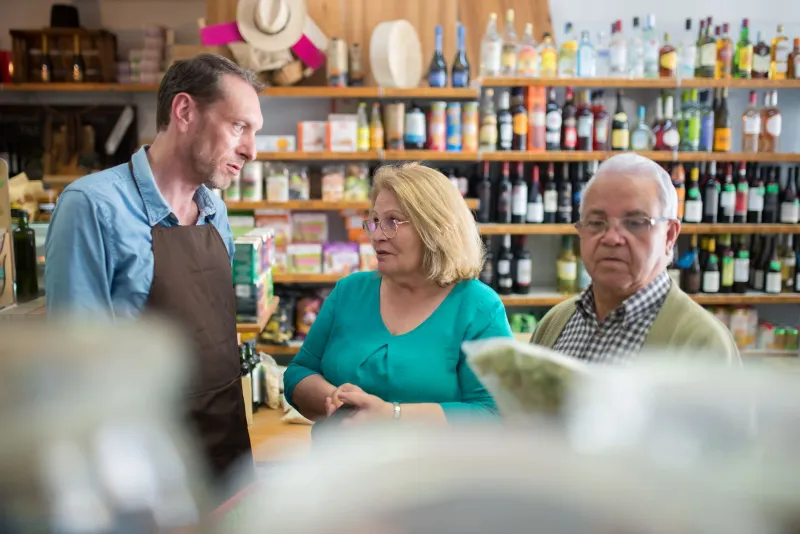
Walk into a hardware store in a town of 2,000 people and something happens that doesn't happen at the big-box retailer forty minutes down the highway. The person behind the counter doesn't just point you toward aisle seven. They ask what you're trying to fix. They tell you the cheaper part will probably fail in six months. They might even know your dad's barn and have an opinion about which approach will actually work out there.
That's not a trained behavior. That's not a service protocol. That's just Tuesday in rural America.
And while corporate retail has spent decades and billions of dollars trying to bottle that feeling — with loyalty apps, customer experience consultants, and Net Promoter Score dashboards — small-town businesses have been delivering it all along without giving it a second thought. The difference is that now, in a market where consumers are increasingly exhausted by transactional, impersonal service, that natural advantage is worth paying attention to.
When Everyone Knows Who Owns the Place
One of the quieter dynamics of rural business life is visibility. In most small towns, the owner isn't a distant shareholder or a regional manager who swings through once a quarter. They're the person unlocking the door in the morning. They're coaching Little League on Saturday. They go to the same church, eat at the same diner, and bump into their customers at the grain elevator.
That visibility changes everything about how a business behaves.
When you know you're going to see a customer at the school fundraiser next week, you don't cut corners on their order. You don't let a complaint go unanswered. You don't hide behind a 1-800 number. Accountability is baked into the geography. It's not a policy — it's a social reality.
For rural business owners, reputation isn't a marketing metric. It's a living thing that either opens doors or closes them, sometimes for generations. That pressure, which might sound stressful, actually produces a standard of care that most corporate environments genuinely cannot manufacture.
The Problem-Solving Culture That Comes From Scarcity
Here's something that doesn't get talked about enough: rural businesses are often the only option in town. No backup. No competitor down the street. If the local mechanic can't figure out your problem, the next one might be an hour away.
You'd think that lack of competition would make service worse. In practice, it often makes it better — just for different reasons than you'd expect.
When you're the only mechanic, the only pharmacy, the only lumber yard in a twenty-mile radius, you develop a reputation that travels fast and sticks hard. Word of mouth in a small town isn't a marketing channel. It's the marketing channel. One bad experience doesn't just lose a customer — it can ripple through an entire community in a week.
That reality forces a kind of creative problem-solving that's rare in larger markets. Rural service providers learn to improvise, to find workarounds, to make do with what's available. They know that telling a customer "we don't carry that" and sending them home empty-handed isn't really an option. So they figure something out. They call a supplier they haven't used in years. They loan a piece of equipment. They help a customer find a solution even when the solution doesn't directly benefit the business.
That resourcefulness, born from constraint, becomes a genuine service differentiator.
Relationships as Infrastructure
There's a term that gets thrown around in business circles: customer lifetime value. It's a way of calculating how much a single customer is worth over time, factoring in repeat purchases, referrals, and brand loyalty.
Rural business owners have understood this concept intuitively for generations, even if they've never called it by that name.
In a small town, you're not just serving a customer. You're serving a family. Often, you're serving that family across multiple generations. The feed store owner who helped a farmer's grandfather figure out a tricky soil problem in 1975 didn't just make a sale — they started a relationship that's still paying dividends today in the form of loyalty that no discount code can compete with.
This long-view relationship model shapes how rural businesses handle everything from pricing to complaints. When a longtime customer hits a rough patch — a bad harvest year, a medical bill that wiped out savings — a rural business owner often finds a way to work with them. Payment plans, extended credit, a quiet discount that doesn't need to be announced. These gestures aren't just kindness. They're investments in relationships that pay back over years and decades.
Try getting that from a national chain's customer service chatbot.
What Big Business Is Trying to Buy
It's worth noticing how hard large corporations are working to replicate exactly this kind of experience. The "local" branding campaigns. The push to train employees to use customers' first names. The community involvement initiatives that feel just slightly off, like a costume rather than a character.
None of it quite lands, and most consumers can feel why. Authenticity isn't a deliverable. You can't roll it out across 3,000 locations after a two-day training seminar.
What rural businesses have is structural. It grows out of genuine interdependence — the understanding that the people you serve are also your neighbors, your kids' teachers, the volunteers who show up when something goes wrong. That web of mutual reliance creates a service ethic that's embedded in the culture, not imported from a corporate playbook.
Turning a Natural Strength Into a Strategy
Here's where it gets interesting for rural entrepreneurs who are thinking about growth. The service culture that small-town businesses have always practiced is increasingly a strategic asset — one worth consciously protecting and even amplifying.
That means a few things in practice. It means resisting the pressure to automate or depersonalize interactions just because the technology exists to do so. It means training any new hires — especially those who come from larger markets — in the relational norms that make small-town service feel different. It means telling that story clearly to customers, including the growing number of remote workers and transplants who've moved to rural communities specifically because they're tired of transactional everything.
Rural business owners who understand their service culture as a competitive moat — not just a personality trait — are the ones who can build something that's genuinely hard for outside competition to erode.
The big chains have the inventory, the marketing budgets, and the logistics. But they can't manufacture the feeling of being known. They can't fake the kind of trust that gets built over years of showing up, solving problems, and being part of the same community as the people you serve.
That's the rural advantage. It was never a handicap. It was always the point.