Cornfields and Code: How Small Towns Are Becoming the Unlikely Birthplace of Tech Startups

For decades, the story went like this: if you wanted to build a tech company, you packed your bags and headed for San Francisco, Austin, or New York. You needed the investors, the talent pipeline, the networking happy hours. You needed the city.
That story is getting rewritten — and rural America is holding the pen.
Across the country, a quiet but real shift is happening. Tech founders are setting up shop in places like Greensburg, Kansas. Bozeman, Montana. Flagstaff, Arizona. Marquette, Michigan. These aren't temporary work-from-anywhere experiments. These are people building companies, hiring locally, and planting roots — and in many cases, they're doing it better than they ever could have in a coastal metro.
The Math Just Works Differently Out Here
Let's start with the obvious: cost. Running a startup in a rural or small-town setting is a fundamentally different financial equation. Office space that would run $8,000 a month in San Francisco might cost $600 in a mid-sized rural town. Housing for your team is a fraction of the price. The burn rate — that relentless countdown clock every startup founder dreads — slows way down.
That breathing room matters more than people realize. When you're not hemorrhaging cash on rent and salaries inflated by a hyper-competitive labor market, you can actually afford to be patient. You can test ideas, pivot slowly, and make decisions based on what's right for the product rather than what's right for your runway.
Jake Morrow, who co-founded an agricultural data software company out of a small town in western Nebraska, puts it plainly: "We bootstrapped for two years before we took a single outside dollar. In Denver or Chicago, we'd have been dead in six months. Out here, we had time to actually figure out what we were building."
Tight-Knit Communities Are Secretly a Competitive Advantage
Here's something the startup world doesn't talk about enough: feedback loops. In a city, getting honest, consistent input from real users is hard. Everyone's busy. Everyone's distracted. Your potential customers are strangers.
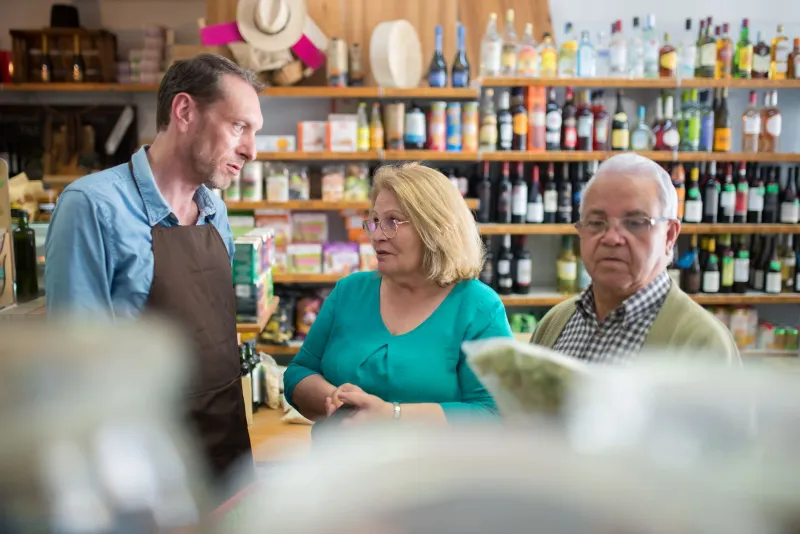
In a small town, your customers are your neighbors. They're at the same diner on Saturday morning. Their kids are on the same soccer team as yours. That proximity creates a kind of informal product development environment that money genuinely cannot buy.
Sarah Hendricks launched a rural healthcare logistics platform from a town of about 4,000 people in eastern Tennessee. Her earliest users were local clinic administrators she'd known for years. "They told me exactly what was broken, in real time, with zero filter," she says. "I didn't have to run focus groups or build elaborate user research pipelines. I just had to show up and listen."
That kind of direct, trust-based feedback is a legitimate edge — especially in the early stages when founders are still figuring out product-market fit.
The Talent Conversation Is More Complicated — and More Interesting
Yes, rural areas face real workforce challenges. There's no sugarcoating that. You're not going to find a deep bench of machine learning engineers in a town of 6,000 people. Recruiting from the outside takes extra effort, and convincing urban tech workers to relocate requires selling the lifestyle as much as the job.
But something interesting is happening on that front, too. Remote work has permanently changed what's possible. A rural startup can hire a developer in Columbus or a designer in Minneapolis without either party moving anywhere. The company gets the talent; the employee gets to keep their life.
And increasingly, the relocation pitch is landing. Quality of life — shorter commutes, outdoor access, affordable housing, slower pace — is a real draw for a segment of the tech workforce that's genuinely burned out on urban living. A few rural startups have even started leaning into it as a recruiting strategy, marketing their location as a feature rather than a bug.
Local Ecosystems Are Starting to Catch Up
For a long time, one of the biggest knocks on rural tech entrepreneurship was the lack of infrastructure — no accelerators, no angel networks, no startup weekends. That gap is narrowing.
State-level economic development programs in places like Iowa, Mississippi, and Montana have started directing resources specifically toward rural innovation. Community foundations are creating small business funds. Some rural towns have converted old downtown buildings into co-working spaces that serve as informal hubs for local entrepreneurs.
University extension programs are also getting in on the action, connecting rural founders with business development resources and mentorship networks that previously felt out of reach. It's not Silicon Valley — nobody's pretending it is — but the scaffolding is going up, piece by piece.
Being Close to the Problem Isn't a Disadvantage
There's another angle worth considering: sector fit. Some of the most compelling rural tech startups aren't building consumer apps or SaaS tools for urban knowledge workers. They're building for agriculture, rural healthcare, logistics, energy, and manufacturing — industries where being embedded in the community isn't just convenient, it's essential.
A founder in rural Iowa building precision irrigation software has a natural advantage over a team in a San Francisco office trying to understand the same problem through Zoom calls and market research reports. Proximity to the actual use case accelerates everything — product development, sales, customer relationships.
This is where rural tech startups have a real shot at building durable moats. They're not competing on the same playing field as every other startup. They're playing a different game entirely.
The Bigger Picture
What's unfolding in small towns across America isn't a fluke or a pandemic-era blip. It's a structural shift driven by remote work, rising urban costs, and a growing recognition that innovation doesn't require a particular zip code.
For rural communities, this is a genuine opportunity — not just to attract outside founders, but to develop homegrown ones. The kids who grew up here and left for the city? Some of them are coming back with skills, networks, and a hunger to build something. The question is whether their hometowns are ready to support them.
The tools, the talent, and the timing are aligning. Rural America has always been resourceful. Now it's getting the chance to be innovative, too.