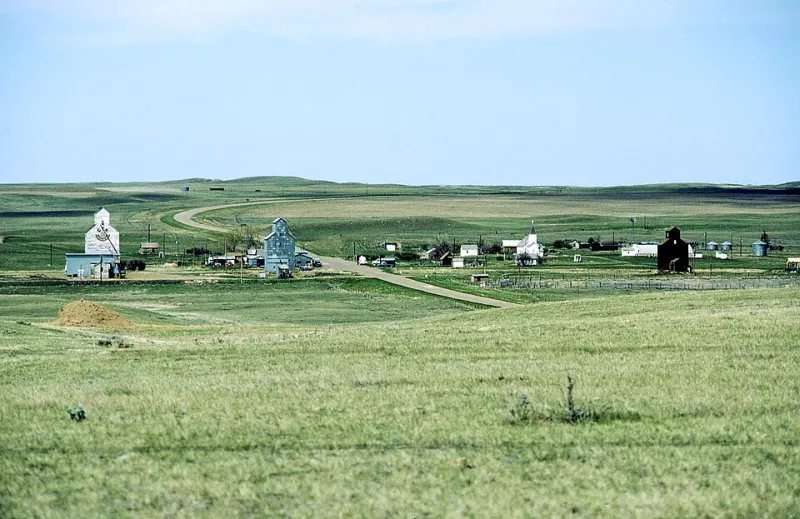
They're Coming for the Quiet: How Remote Workers Are Reshaping Small-Town America

Photo by Photo by K. K. on Unsplash on Unsplash
For years, the story about rural America went something like this: young people leave, storefronts shutter, and the population slowly grays until the town fades into the map. It was a narrative backed by real data — and real heartbreak for the communities living it.
But something has been quietly disrupting that story. Since 2020, a steady stream of remote workers, freelancers, and work-from-anywhere professionals has been flowing toward small towns, not away from them. And the communities on the receiving end are scrambling to understand what it means — for better and for worse.
The Numbers Don't Lie
The remote work revolution didn't just change where people work. It changed where people live. According to the USDA Economic Research Service, nonmetro counties saw net positive domestic migration for the first time in over a decade during the early 2020s. A 2023 report from the Heartland Forward think tank found that mid-size and small rural communities in states like Vermont, Tennessee, Montana, and Arkansas were seeing measurable population upticks driven largely by remote professionals.
Platforms like Zillow and Realtor.com tracked the shift in real time — search traffic for rural zip codes spiked, and home prices in places like Bentonville, Arkansas, and Bozeman, Montana, climbed accordingly. Even smaller, less-glamorous towns started seeing inquiries from buyers who'd never previously considered leaving their metro areas.
The appeal isn't hard to understand. Lower cost of living, more space, slower pace, and — increasingly — the broadband infrastructure to actually make remote work viable. That last piece was the missing puzzle for a long time, and as connectivity has improved across rural America, the barriers to relocation have dropped significantly.
Who's Actually Moving — and Where
Not every small town is seeing the same influx. The communities attracting the most remote workers tend to share a few traits: decent internet access, some existing amenity base (think: a walkable downtown, outdoor recreation, or a regional healthcare facility), and proximity to at least one mid-size city for occasional travel or errands.
Places like Moab, Utah; Taos, New Mexico; and Brevard, North Carolina, have been remote-worker magnets for a while now. But the second wave is reaching less-obvious destinations — small manufacturing towns in the Midwest with affordable housing stock, river towns in Appalachia with fiber optic lines, and farming communities in the Great Plains where a three-bedroom house still costs less than a studio in Denver.
Some towns have leaned in aggressively. Tulsa, Oklahoma's "Tulsa Remote" program offered $10,000 cash incentives to remote workers willing to relocate. Smaller communities have tried their own versions — free coworking memberships, relocation grants, even land giveaways — hoping to seed a new generation of residents who bring outside income and spend locally.
Not Everyone's Rolling Out the Welcome Mat
Here's the part that doesn't always make the feel-good headlines: not every long-time resident is thrilled about the newcomers.
When a remote worker making a San Francisco salary moves into a town where the median household income is $42,000, the economic math gets complicated fast. Home prices rise. Rents follow. The local teacher or mechanic who's lived there for 30 years suddenly finds themselves priced out of the neighborhood they grew up in.
In some Colorado mountain towns, locals have coined the term "Zoom-town" — and they don't always say it warmly. The tension isn't about hostility toward individuals. It's about the pace of change, the erosion of affordability, and the quiet fear that a community's identity might get overwritten by people who chose it for its aesthetics but don't share its history.
Cultural friction is real, too. Remote workers who moved from cities sometimes arrive with different expectations about services, amenities, and local politics. Long-time residents can feel like guests in their own towns when the coffee shop that used to serve farmers at 5 a.m. pivots to oat milk lattes and laptop-friendly hours.
None of this means the migration is a net negative. It just means communities have to be intentional about managing it.
What Smart Towns Are Doing Differently
The communities navigating this transition most successfully are the ones treating it like a planning challenge, not just a windfall.
That means having honest conversations about housing supply — building more of it, and building it at a range of price points — before the influx prices out the workforce that keeps the town running. It means investing in the infrastructure remote workers need (reliable broadband, coworking spaces, strong healthcare) while protecting the things that made the town worth moving to in the first place.
It also means creating actual on-ramps for newcomers to get involved in the community, not just consume it. Towns that are doing this well are launching programs that connect remote workers with local volunteer opportunities, civic boards, and small business networks. The goal is integration, not just coexistence.
Local business owners who've adapted quickly are seeing real upside. A hardware store in a small Tennessee town told us their weekday foot traffic doubled after a wave of remote workers moved in — turns out people who work from home fix things during business hours. A diner in rural New Hampshire started offering a "remote worker lunch special" and filled tables that used to sit empty on Tuesdays.
The Bigger Opportunity
For rural communities that have spent years watching their tax base shrink and their young people leave, the remote work migration represents something genuinely rare: a second chance.
But second chances require strategy. Towns that passively wait for remote workers to show up and save them are likely to be disappointed — or overwhelmed. The ones that will thrive are the ones asking hard questions now: What kind of growth do we want? Who do we want to attract? What do we need to protect?
That's not a new conversation for rural America. Small towns have always had to be scrappy and self-reliant. The difference now is that the demographic tide — for once — might actually be with them.
The quiet isn't going away. But it's starting to share space with something new. How rural communities respond to that will define the next chapter of their story.