We Own the Lines: How Rural Communities Are Taking Broadband Into Their Own Hands
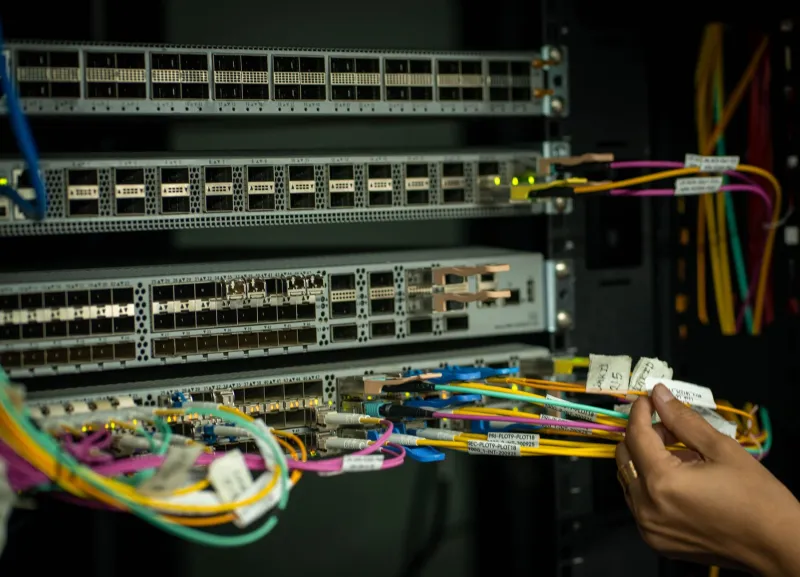
For years, the pitch was always the same: be patient, the big providers will get there eventually. Tax incentives were dangled, timelines were announced, and press releases were issued. Then nothing happened — or what did happen barely cleared the bar. Spotty service, throttled speeds, and customer support lines that felt like a punishment.
So some rural communities stopped waiting. They pooled resources, filed paperwork, and started building their own networks. Welcome to the world of rural broadband cooperatives — and it turns out, ownership changes everything.
The Co-op Model Isn't New. Applying It to Internet Is.
If you live in rural America, you probably already trust a cooperative with something important. Electric co-ops have kept the lights on in rural communities since the 1930s, born out of the same frustration: private companies didn't think it was worth their while to string lines out to the countryside. Farmers and small-town residents banded together, formed member-owned utilities, and got the job done themselves.
Broadband co-ops are following that same blueprint almost a century later. Members buy in, either through a one-time fee or an ongoing service agreement, and in return they get a vote in how the network is run, pricing decisions, and — critically — a share in the infrastructure itself. The revenue doesn't flow to a distant shareholder. It stays local, reinvested in upgrades, maintenance, and expansion.
There are now dozens of these organizations operating across states like Minnesota, Vermont, North Carolina, and Montana. Some sprouted from existing electric co-ops that added fiber to their service offerings. Others started from scratch, organized by frustrated residents who'd simply had enough.
What Ownership Actually Looks Like on the Ground
Take a rural county where the nearest cable provider's service map conveniently stops just outside the town limits. A group of residents — maybe a retired engineer, a couple of farmers who need reliable connections for precision ag tools, a work-from-home parent — starts asking questions. They find out about federal funding programs like the USDA's ReConnect Program or grants through the FCC's Rural Digital Opportunity Fund. They attend a meeting. Then another. They form a board.
Within a couple of years, they're laying fiber.
The difference between that and waiting on a corporate provider isn't just speed — it's accountability. When the co-op board meets, the people in the room are also the customers. If service goes down during a winter storm, the folks fielding complaints are neighbors, not a call center three states away. That proximity creates a different kind of pressure, and a different kind of responsiveness.
It also creates something harder to quantify: pride. People who helped build a thing tend to take care of it differently.
The Hurdles Are Real — and They're Complicated
None of this is easy, and anyone who tells you otherwise is selling something. Broadband co-ops face a tangle of challenges that traditional utility models don't always prepare them for.
For starters, the regulatory landscape is patchwork. Telecommunications law operates at both the state and federal level, and the rules governing what a co-op can and can't do vary wildly depending on where you are. Some states have laws — often lobbied into existence by incumbent carriers — that restrict municipal or cooperative broadband networks from expanding into adjacent territories. That can cap growth just when momentum is building.
Funding is another maze. The money is out there — billions of dollars in federal broadband investment have been authorized in recent years — but the application process is genuinely brutal. Grant programs require detailed engineering studies, financial projections, and legal filings that most small volunteer-led organizations simply aren't equipped to handle alone. Many co-ops have had to bring in outside consultants or lean heavily on state broadband offices just to get through the paperwork.
And then there's the timing gap. Even after funding is secured, it can take years to deploy infrastructure. Meanwhile, residents are still paying for inferior service — or going without — while the build-out inches forward. Managing expectations inside a member-owned organization, where everyone has a vote and an opinion, requires real community leadership.
Why the Model Still Makes Sense
Despite the friction, the cooperative model has some structural advantages that are hard to argue with.
First, there's no pressure to maximize profit for outside investors. A co-op can price its service to cover costs and fund improvements rather than to hit a quarterly earnings target. That means rural households — which often have lower average incomes than urban ones — can access reliable broadband at rates that don't feel punitive.
Second, co-ops tend to build for longevity. When you own the infrastructure, you're thinking in decades, not product cycles. Fiber networks built by co-ops are typically designed to last 30 to 40 years, with capacity that can be upgraded as technology improves. That's a fundamentally different investment horizon than what a private carrier operating on a five-year business plan is likely to make.
Third — and this one matters a lot in the rural context — co-ops create local jobs. Network technicians, customer service staff, administrative roles: these are positions that stay in the community. The money paid in service fees circulates locally rather than disappearing into a corporate headquarters somewhere else entirely.
The Bigger Picture for Rural Communities
Broadband isn't just about streaming movies or video calls, though those things matter too. It's infrastructure in the same way that roads and electricity are infrastructure. Remote work, telehealth, precision agriculture, e-commerce, online education — all of it runs on connectivity. A rural community without reliable internet is a rural community with one hand tied behind its back.
When a co-op builds a network, it's not just solving a technical problem. It's making a statement about what the community believes it deserves — and what it's willing to do to get there. That kind of self-determination has always been part of rural America's identity. The broadband co-op movement is just the latest chapter.
The towns that figure this out early aren't just getting faster internet. They're building the kind of digital foundation that makes everything else — new businesses, new residents, new possibilities — more likely to take root.
And they own the lines.