Turning the Tide: Rural Communities Fighting Back for Clean, Reliable Water
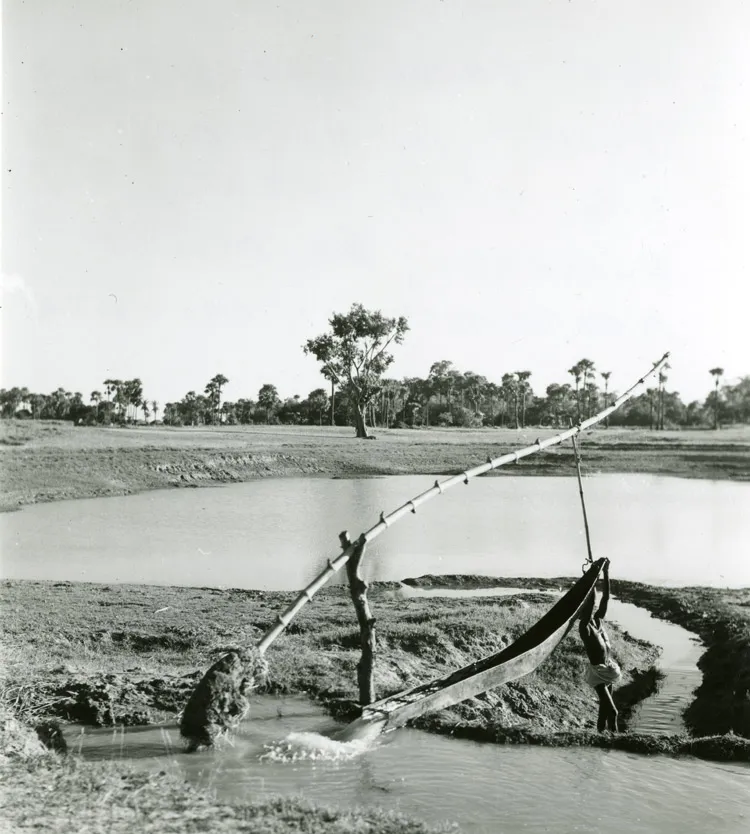
Photo: Frank Bond, Public domain, via Wikimedia Commons
When the Well Runs Dry
For most people in urban America, water is something that happens when you turn on a tap. In rural communities, it's something you think about every single day.
Whether it's a multigenerational farm family watching a creek shrink each summer, a small town with pipes that predate the Korean War, or a rancher navigating a water rights dispute that's been simmering for two decades — the stakes around water in rural America are deeply personal. And increasingly, they're urgent.
Across the country, rural communities are grappling with a convergence of pressures: prolonged drought cycles, aging water infrastructure, agricultural runoff, industrial contamination, and a patchwork of water rights laws that can pit neighbor against neighbor. The federal government has offered funding through programs like the USDA's Water and Waste Disposal Loan and Grant Program, and the Infrastructure Investment and Jobs Act directed billions toward rural water systems. But money alone doesn't solve problems that are as much about governance, trust, and local knowledge as they are about pipes and pumps.
That's why some of the most promising water solutions in rural America aren't coming from Washington. They're coming from the ground up.
Co-ops, Coalitions, and Community Power
Rural water cooperatives — community-owned systems that manage water supply and distribution collectively — have existed in the United States for decades, particularly in the Great Plains and the South. But a new generation of water co-ops is emerging, shaped by modern challenges and armed with better technology.
In parts of rural Texas and Oklahoma, where aquifer depletion has become a slow-motion crisis, groups of farmers and landowners have banded together to form groundwater conservation districts with real teeth. These aren't rubber-stamp organizations. They set pumping limits, track usage through metered monitoring systems, and enforce rules that protect long-term supply over short-term gain. It's a hard conversation to have with a neighbor, but rural communities are increasingly willing to have it.
"Nobody wants to be told they can't pump as much as they used to," admits one third-generation farmer in the Texas Panhandle. "But we all know what happens if we don't figure this out together. There won't be anything left to argue about."
Similar coalitions are forming in the arid West, where water rights — often governed by the doctrine of prior appropriation, or "first in time, first in right" — can make collaboration feel legally risky. Still, informal water-sharing agreements between ranchers, often built on handshakes and long relationships, are being formalized into documented cooperative arrangements that provide more stability for everyone involved.
Tech on the Farm, Clean Water in the Glass
Technology is playing a growing role in how rural communities manage water, and it doesn't always look the way you might expect.
Soil moisture sensors and precision irrigation systems are helping farmers in drought-prone regions use dramatically less water without sacrificing yields. In some areas, these tools have cut water usage by 20 to 30 percent — a significant win in places where every drop counts. The upfront cost has been a barrier for small operations, but USDA cost-share programs and state-level grants are making these tools more accessible than ever.
On the drinking water side, small rural utilities are experimenting with low-cost water quality monitoring systems that can detect contamination in real time, rather than waiting for quarterly lab reports. In communities near legacy industrial sites or heavy agricultural zones, early detection can make the difference between a contained problem and a public health crisis.
Some rural towns are also revisiting older, decentralized solutions — rainwater harvesting, constructed wetlands for natural filtration, and restored riparian buffers along streams — that work with local ecosystems rather than against them. These approaches won't replace conventional water infrastructure, but they can meaningfully reduce pressure on systems that are already stretched thin.
The Fight for Water Rights
Not every water story in rural America is about conservation technology or cooperative management. Some of them are about power — and who gets to decide.
In several western states, rural communities have found themselves downstream, literally and figuratively, from large agricultural operations or energy companies that hold senior water rights. When drought years arrive and allocations get cut, it's often the smaller, newer, or less politically connected users who feel it first.
Grassroots advocacy organizations, many of them led by farmers and ranchers themselves, are pushing back. They're showing up at state water board hearings, organizing letter-writing campaigns, and in some cases, taking legal action to protect community water sources from diversion or contamination. It's slow, exhausting work — but it's producing results in courtrooms and statehouses that would have seemed unlikely a decade ago.
Tribal nations in rural areas have also been increasingly assertive in protecting water rights tied to treaty agreements, with some landmark legal victories in recent years affirming reserved water rights that had long been ignored or disputed.
A Resource Worth Fighting For
What ties all of these stories together — the co-ops, the tech adopters, the water rights advocates — is a shared recognition that water is not a problem someone else will solve. In rural America, where self-reliance has always been a core value, that recognition is translating into action.
The communities that are getting ahead of the water crisis are the ones that started having hard conversations early. They mapped their vulnerabilities, built trust across property lines, and found ways to balance individual needs with collective survival. That's not easy anywhere. In small towns where everyone knows everyone, where a dispute over water can strain a friendship that goes back generations, it takes real courage.
But rural America has never been short on that.
If your community is navigating water challenges — whether it's aging infrastructure, access issues, or quality concerns — connecting with your local USDA Rural Development office or state extension service is a solid first step. And if you've got a water success story to share, RuralHub wants to hear it.