Old Bones, New Purpose: The Rural Buildings Being Rescued by Creative Communities
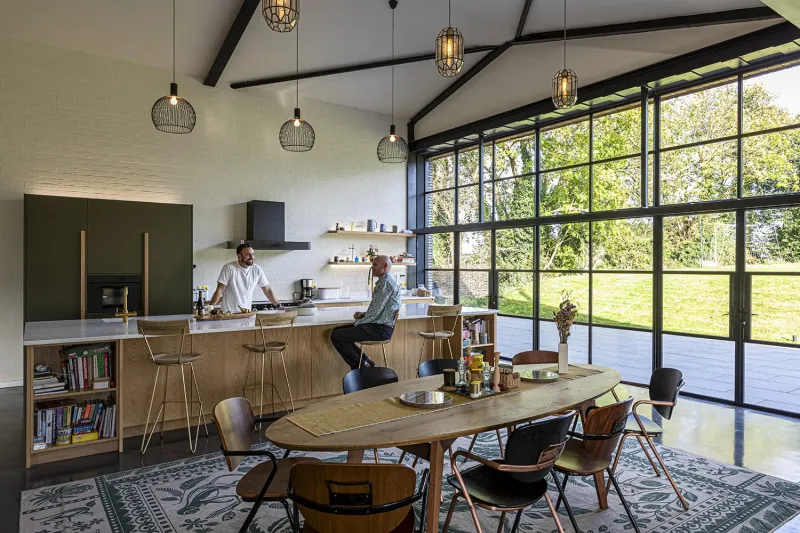
Photo: repurposed barn co-working space rural small town interior, via cbb-architects.co.uk
Drive through enough small towns and you start to notice them — the old grain elevator with broken windows, the feed store with a faded sign that hasn't changed since 1987, the creamery that's been sitting empty since the plant moved operations somewhere bigger. These buildings aren't just eyesores. They're time capsules. And in more and more places, someone is finally opening them back up.
A quiet but meaningful trend is taking root across rural America: people are breathing new life into old agricultural and commercial structures, turning them into the kinds of spaces their communities actually need right now. Co-working desks. Pottery studios. Incubator kitchens. Event halls. Meeting rooms. The buildings are different in every town, but the underlying idea is the same — stop letting good bones go to waste.
Why These Buildings Matter Beyond the Obvious
There's a practical argument for adaptive reuse, and then there's the deeper one.
The practical argument is straightforward: repurposing an existing structure is almost always cheaper than building something new from scratch. The foundation is there. The walls are there. In many cases, the character and craftsmanship that would cost a fortune to replicate today are already baked in. For rural communities working with limited budgets, that head start is significant.
But the deeper argument is about identity. Rural towns aren't just looking for square footage — they're looking for places that feel like them. A co-working space carved out of a hundred-year-old grain elevator carries something that a generic office park never could. It tells a story about where the community came from, even as it's being used to figure out where it's going.
That combination — history plus utility — turns out to be surprisingly powerful for attracting people and investment.
A Grain Elevator in Nebraska Becomes Something Unexpected
In Ord, Nebraska, a town of around 2,000 people, an old grain storage complex sat idle for years after its original operation wound down. Instead of watching it deteriorate further, a group of local entrepreneurs and community organizers put together a plan to convert part of the structure into a shared workspace and event venue.
The renovation wasn't glamorous. It involved a lot of volunteers, a lot of weekends, and more than a few calls to the county historical preservation office. But the result was a space that quickly became a hub for the kinds of people Ord needed more of: freelancers who wanted to work locally instead of driving to the nearest city, small business owners looking for affordable office space, and creatives who needed a studio without a long-term lease.
What struck people most wasn't the exposed timber or the original concrete floors — though those got plenty of attention on social media. It was the fact that the space worked. People showed up. Conversations happened. A couple of new businesses got their start in that building.
The Maker Studio Model Is Spreading
In rural communities with strong craft and agricultural traditions, maker studios have become one of the most natural fits for repurposed buildings. Old blacksmith shops, mill buildings, and canneries have the kind of open, durable floor plans that creative work actually needs — and they often come with three-phase electrical service and loading docks that a traditional office renovation would never think to include.
In Paonia, Colorado, a small mountain town with deep roots in farming and arts, a former apple packing shed was converted into a shared maker space that now hosts woodworkers, ceramicists, a small-batch preserves operation, and a community canning kitchen available to local food producers by the hour. The building's agricultural past isn't just aesthetic — it's functional. The infrastructure that once processed harvests now helps a new generation of rural producers get their products to market.
These kinds of spaces do something else, too: they lower the barrier to entry for people who want to start something but can't afford to kit out their own workshop or commercial kitchen. Shared equipment, shared costs, shared community. It's a model that fits rural economies particularly well.
What Makes These Projects Actually Succeed
Not every old barn becomes a beloved community hub. Plenty of well-intentioned renovation projects stall out, run out of money, or open to tumbleweeds. The ones that work tend to share a few common traits.
Deep community buy-in from the start. The most successful projects aren't top-down — they come out of genuine conversations with residents about what they actually need. A co-working space nobody asked for is just an empty room with good Wi-Fi.
A realistic business model. Grant funding can get a project off the ground, but sustainable spaces need a revenue plan. That might mean membership fees, event rentals, anchor tenants, or some combination. The Paonia packing shed, for instance, generates steady income from its commercial kitchen rentals — which in turn helps subsidize lower rates for local makers.
Preservation sensibility. The best adaptive reuse projects don't try to erase what the building was. They lean into it. Original materials, honest structural elements, and thoughtful signage that acknowledges the building's history tend to resonate far more than a complete gut renovation.
Anchor partnerships. Libraries, extension offices, local colleges, and arts organizations make excellent partners for community hub projects. They bring foot traffic, credibility, and sometimes funding that a purely private venture can't access on its own.
Funding the Vision
Money is always the question. Historic Tax Credits — both federal and state — are one of the most underutilized tools available to rural preservation projects. The federal Historic Tax Credit offers a 20% credit on qualified rehabilitation expenses for income-producing historic properties, and many states stack their own credits on top of that.
USDA Community Facilities grants, CDBG (Community Development Block Grant) funds, and state rural development programs have all played roles in funding projects like the ones described here. Crowdfunding has also proven surprisingly effective for rural adaptive reuse — partly because the story of saving a beloved old building tends to travel well on social media, even beyond the local community.
More Than a Renovation
At its core, this trend isn't really about buildings. It's about communities deciding that their history and their future aren't in conflict — that you can honor where you came from while building something new on top of it.
The grain elevator, the feed store, the old creamery: they were built because communities needed them. The people converting them today are working from the same instinct. They see something their town needs, they look around at what they have to work with, and they get to it.
That's a pretty rural way of doing things.