Wired for the Future: How Rural Towns Are Finally Getting the Internet They Deserve
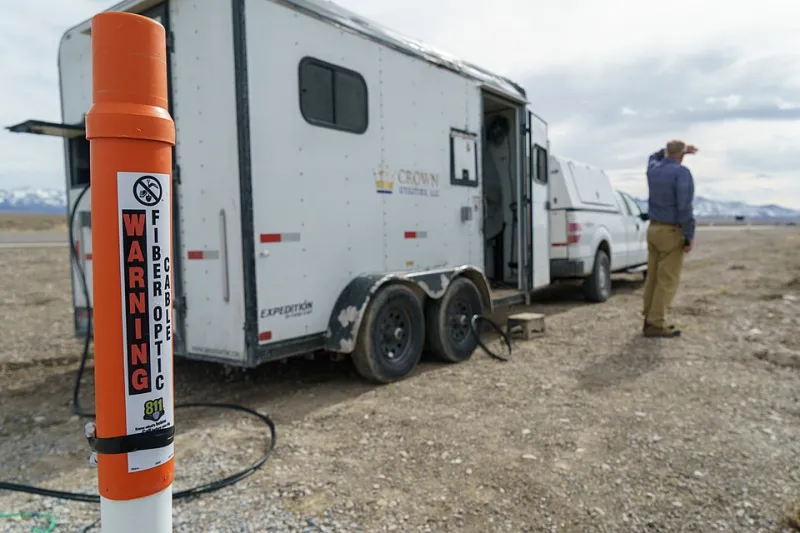
Photo: USDAgov, Public domain, via Wikimedia Commons
For a long time, the running joke in places like Hartwick, Iowa or Bonita Springs, Texas was that you could get a better cell signal standing in the middle of a cornfield than sitting at your kitchen table. Funny, sure — until you're trying to run an online shop, join a work-from-home meeting, or help your kid submit a homework assignment.
That joke is getting old fast. And increasingly, rural communities aren't waiting around for the big telecom companies to ride in and save them. They're building their own solutions — and it's working.
The Problem Nobody Wants to Talk About (But Everybody Feels)
The Federal Communications Commission estimates that roughly 21 million Americans still lack access to high-speed broadband. Independent researchers put that number even higher, arguing that the FCC's own data collection methods undercount underserved rural areas. Either way, the gap is real — and it hits rural residents and small-business owners harder than just about anyone.
Think about what reliable internet actually means for a rural entrepreneur. It's the difference between selling crafts to your county and selling them to customers in 40 states. It's the difference between a remote worker choosing your small town as their home base or passing it up for somewhere with better connectivity. It's the difference between a telehealth appointment and a 90-minute round trip to the nearest clinic.
When connectivity is shaky or nonexistent, economic opportunity doesn't just slow down — it skips town entirely.
Towns That Stopped Waiting and Started Building
Chatham, Virginia is a small community that made national headlines a few years back — not for anything dramatic, but for doing something quietly radical: building its own fiber-optic network. Through a public-private partnership between the county government and a local internet provider, Chatham built out infrastructure that now serves both residents and businesses at speeds that rival anything you'd find in a mid-sized city.
The results were immediate. Local businesses that had been limping along on satellite connections suddenly had the bandwidth to process online orders, run cloud-based accounting software, and host video calls without freezing every three minutes. A handful of remote workers who had been commuting out of town weekly started working from home full-time — and spending their money locally.
Out west, rural electric cooperatives have become unlikely heroes of the broadband story. In states like Montana, Kansas, and North Carolina, electric co-ops — organizations that rural communities built decades ago because private utilities wouldn't serve them — are now laying fiber alongside their power lines. The logic is almost elegant: they already have the poles, they already have the relationships, and they already understand what it means to serve people that the private sector forgot.
The Federal Money Is There — If You Know Where to Look
The good news for communities still waiting on connectivity is that there's more funding available right now than at almost any point in history. The Infrastructure Investment and Jobs Act allocated $65 billion specifically for broadband expansion, with a significant chunk earmarked for rural and underserved areas. On top of that, the USDA's ReConnect Program has already pushed hundreds of millions of dollars into rural broadband projects across dozens of states.
The catch? Getting that money requires doing the homework. Grant applications are competitive, and communities that show up with a clear plan — documented coverage gaps, community support, a viable deployment model — are far more likely to walk away with funding than those that show up with just a wish list.
Here's a practical starting point for rural communities looking to get moving:
Map what you actually have. Before you apply for anything, get a clear picture of your current coverage. Tools like the FCC's Broadband Map are a starting point, but crowdsourced speed test data from residents often tells a more accurate story.
Form a local broadband committee. This doesn't have to be fancy. A group of engaged residents, a county commissioner or two, a local business owner, and maybe your electric co-op rep can form the core of a planning group that drives the process forward.
Explore your deployment options. Fiber is the gold standard, but it's also the most expensive to build. Fixed wireless and hybrid models can get connectivity to residents faster and at lower upfront cost, while fiber buildout continues in phases.
Partner up. Schools, libraries, hospitals, and local governments can all be co-applicants on broadband grants — and having institutional partners strengthens your application considerably.
Hire a grant writer or consultant. It sounds like an expense, but the return on a successful grant application can be enormous. Many rural development organizations offer low-cost assistance for exactly this kind of work.
What Connectivity Actually Unlocks
It's worth stepping back and thinking about what all of this is really about. Broadband isn't the end goal — it's the infrastructure that makes everything else possible.
A farmer with a reliable connection can access precision agriculture platforms, sell direct to consumers through an online store, and monitor equipment remotely. A Main Street retailer can compete in e-commerce without giving up on the physical storefront. A young person who grew up in a small town can build a career there instead of feeling forced to leave for a bigger city.
That last one matters more than people sometimes acknowledge. Rural communities have been losing young residents for decades, and lack of opportunity — including digital opportunity — is a big part of why. When a town gets wired, it doesn't just get faster internet. It gets a fighting chance at keeping the next generation around.
The Momentum Is Real
None of this is easy. Broadband buildouts take time, require sustained political will, and don't always go smoothly. But the communities that have pushed through — the Chathams, the rural co-ops, the scrappy county coalitions that refused to keep waiting — are proof that it's doable.
Rural America has always figured out how to build what it needs when nobody else would build it for them. Broadband is just the latest chapter in that story.