Why Own It When You Can Share It? Rural Businesses Are Rethinking the Equipment Game
There's an old piece of conventional wisdom that says if you're serious about your operation, you buy your own equipment. No borrowing, no sharing, no depending on someone else's schedule. For generations, that thinking shaped how rural businesses operated — and how much debt they carried.
But something's shifting out there in small-town America. A growing number of farmers, contractors, and rural entrepreneurs are quietly dismantling that old model, piece by piece. They're trading ownership for access, and in many cases, they're coming out way ahead.
The Math That Changed Everything
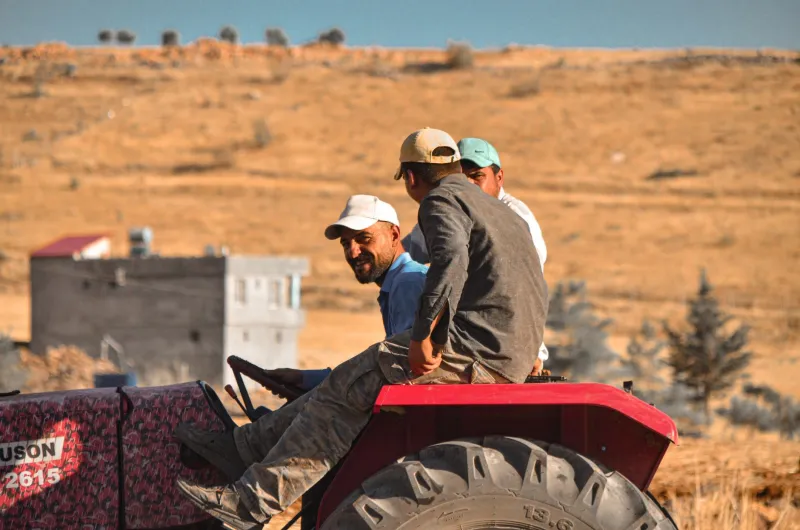
Let's be honest about what owning major equipment actually costs. A mid-range GPS-enabled tractor can run $150,000 or more. A commercial-grade grain dryer? Easily $50,000 to $80,000. Add in maintenance, insurance, storage, and the inevitable repairs, and the true cost of ownership balloons fast — especially for operations that only need a piece of equipment a few weeks out of the year.
That's the math that's been pushing rural business owners toward alternatives. When you only need a piece of specialty equipment for 30 days annually, buying it outright stops making a whole lot of sense.
Take Marcus Teller, a row crop farmer outside of Pratt, Kansas. A few years back, he was eyeing a new precision planter that would've cost him close to $90,000. Instead of financing it, he connected with three neighboring operations through a county farm bureau meeting and proposed a cost-sharing arrangement. They split the purchase, set up a rotating schedule, and each paid a fraction of what solo ownership would've cost.
"We all needed it at slightly different times anyway," Marcus says. "The scheduling conflicts people warned me about? Honestly, we've barely had any."
Online Marketplaces Are Opening New Doors
Beyond neighbor-to-neighbor deals, digital platforms are expanding what's possible. Sites like Farm Equipment Exchange, Machinery Pete, and even Facebook Marketplace have made it dramatically easier for rural entrepreneurs to find used equipment at reasonable prices — or to sell gear they've outgrown.
The reach of these platforms matters. A small sawmill operator in rural Vermont can now browse listings from a retiring timber operation in Oregon. A specialty vegetable grower in Mississippi can source a used transplanter from a farm in Pennsylvania that switched to a different crop rotation. That kind of geographic reach simply didn't exist a decade ago.
For buyers, it means more options and more competitive pricing. For sellers, it means liquidating idle assets instead of letting them rust in a shed. Either way, capital that used to sit locked up in depreciating machinery starts moving again.
Equipment Libraries and Co-ops: The Community Model
Some rural communities are taking the sharing concept even further, building formal structures around it. Equipment lending libraries — often organized through agricultural extension offices, rural electric cooperatives, or local economic development groups — are popping up across the country.
In Custer County, Nebraska, a coalition of small-scale producers helped launch a shared equipment pool that includes everything from soil sampling tools to a commercial food dehydrator. Members pay an annual fee and reserve equipment through a simple online booking system. The pool has grown from eight pieces of equipment to more than 30 in just three years, largely funded by member fees and a small USDA Rural Development grant.
"It started because one of our members needed a flame weeder for organic certification and couldn't justify buying one," explains the program's coordinator. "Now we've got people using equipment they never would've had access to otherwise. It's changed what's possible for some of these operations."
The cooperative model works especially well for specialty or niche equipment — the kind of gear that's genuinely useful but too expensive to justify for a single small operation. Think cold storage units, commercial kitchen equipment for value-added food producers, or precision soil sensors.
Peer Networks: The Informal Layer That Actually Works
Not every arrangement needs a formal structure. Across rural America, informal peer networks — built through farm bureau chapters, commodity groups, church communities, and even social media groups — are facilitating equipment swaps and rentals every single day.
A Facebook group for small-scale hog producers in the Midwest regularly features posts from members offering to rent out equipment during their off-season. A network of rural women farmers in the Southeast has built a reputation for loaning specialty tools to members starting new operations. These arrangements are flexible, trust-based, and often require nothing more than a handshake and a fair hourly rate.
They also build something that no marketplace algorithm can replicate: genuine community capital. When you've borrowed your neighbor's baler and returned it clean and full of diesel, you've made a deposit in a relationship that pays dividends far beyond any single transaction.
What to Watch Out For
Sharing arrangements aren't without their complications. Maintenance responsibilities need to be clearly spelled out before anyone signs anything — or shakes hands on anything. Who pays when something breaks down mid-season? Who handles insurance? What happens when two partners need the equipment at the same time during a narrow planting window?
The operations that make sharing work best tend to be the ones that over-communicate upfront. Written agreements, even simple ones, prevent the kind of ambiguity that turns good neighbors into tense ones. Some co-ops hire a part-time coordinator just to manage scheduling and maintenance tracking — an expense that quickly pays for itself when you're managing 20 or 30 shared assets.
It's also worth being realistic about timing. Shared equipment works beautifully when your operational calendar doesn't perfectly overlap with your partners'. When everyone needs the same machine during the same two-week window, things get complicated fast.
The Bigger Picture
What's driving all of this isn't just economics, though the economics are compelling. It's also a recognition that rural communities thrive when resources circulate locally rather than sitting idle or flowing out to big equipment dealers and finance companies.
Every dollar that stays in a community-based equipment arrangement is a dollar that isn't going to a monthly loan payment on a machine that sits unused eight months a year. Every relationship built around a shared piece of equipment is a thread in the fabric of a community that knows how to take care of its own.
Rural entrepreneurs have always been resourceful. What's changing is the toolkit available to them — and the growing willingness to challenge assumptions about what ownership has to look like.
If you've got equipment sitting idle, or a need you can't quite justify buying your way out of, it might be worth a conversation with the people around you. Chances are, someone nearby is thinking the same thing.