Dirt Rich: Why Savvy Rural Landowners Are Treating Their Acres Like a Portfolio

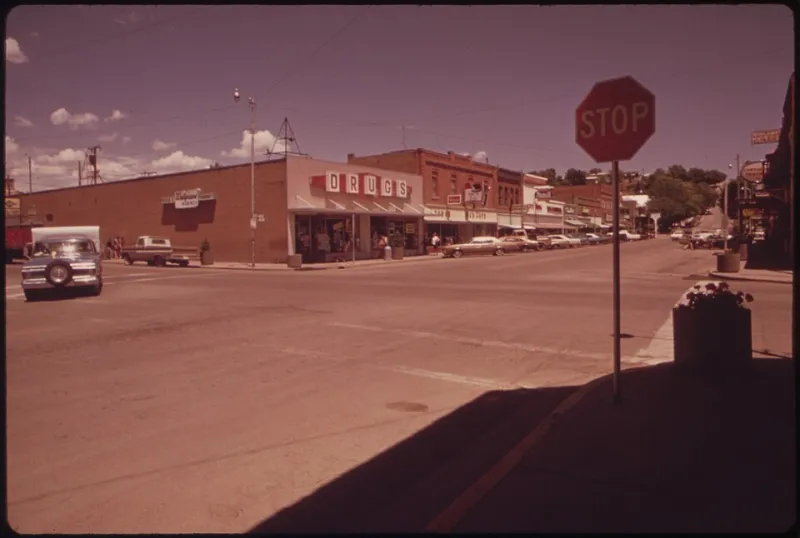
Photo: Godot13, CC BY-SA 4.0, via Wikimedia Commons
When stock markets wobble and inflation eats into savings, a lot of investors start looking for something tangible to hold onto. For rural landowners, that tangible thing has been under their boots all along.
Across the country, farmers, ranchers, and rural property owners are rethinking what their land is actually worth — not just in terms of crop yields or cattle grazing, but as a multi-layered financial asset that can generate income in ways that didn't exist a decade ago. The conversation has shifted from "what can I grow here" to "what can this land do for me economically, across every possible dimension."
And honestly? The options are pretty remarkable.
Farmland as a Hedge: The Numbers Behind the Trend
Over the past 30 years, U.S. farmland has delivered average annual returns that have outpaced inflation and held their own against equities — without the gut-punch volatility. According to data from the USDA and the National Council of Real Estate Investment Fiduciaries, farmland values have shown consistent appreciation over the long haul, even during economic downturns.
That stability isn't an accident. Land is finite. Food demand isn't going away. And as development pressure pushes outward from cities, rural acreage near growth corridors has picked up additional value that pure agricultural metrics don't capture.
"People used to think of our land as just what it produced," says Mark Hensley, a third-generation grain farmer in central Illinois. "Now I think about it like a balance sheet. The crop income is one line. But there are a lot of other lines I wasn't paying attention to before."
Conservation Easements: Getting Paid to Keep Land as Land
One of the most established tools in the rural landowner's financial toolkit is the conservation easement — and it's still underutilized by a lot of property owners who haven't heard much about it.
Here's the basic idea: a landowner voluntarily agrees to restrict certain types of development on their property in perpetuity. In exchange, they typically receive a significant tax deduction based on the difference between the land's unrestricted market value and its value under the easement. Land trusts and government programs — including the USDA's Agricultural Conservation Easement Program (ACEP) — are the common partners in these arrangements.
For families who want to keep land in agriculture and out of development, easements offer both financial relief and a legacy tool. The deduction can be substantial, sometimes reaching millions of dollars on larger parcels, and in some cases the easement itself generates a direct payment from the purchasing organization.
"It let us keep the farm in the family without the estate tax nightmare," says Linda Carver, who co-manages a 900-acre operation in western Virginia with her husband. "We weren't going to sell, but we needed a way to make the math work for the next generation. The easement bought us time and money."
Carbon Credits: The New Cash Crop Nobody's Talking About Enough
If conservation easements are the established play, carbon markets are the emerging one — and rural landowners who get in early stand to benefit the most.
The premise is straightforward: healthy soil, forests, and grasslands sequester carbon dioxide. Companies and organizations looking to offset their emissions will pay for verified carbon sequestration. Farmers and landowners who adopt practices like no-till farming, cover cropping, or managed grazing can register those practices with a carbon marketplace and receive payments per metric ton of carbon stored.
Platforms like Indigo Ag, Nori, and Soil Carbon Initiative have made this more accessible for individual landowners, though the verification process and payment structures vary. It's worth doing your homework — and ideally talking to an ag attorney or financial advisor before signing anything — but the income potential is real.
In some cases, landowners are layering carbon payments on top of existing farming operations, essentially getting paid twice for the same land: once for what it produces, and once for how it's managed.
Timber, Minerals, and the Stuff You Might Be Sitting On
Not every rural property is a row-crop operation, and that's actually an advantage when it comes to diversifying income streams.
Timber rights on forested land can generate meaningful revenue through selective harvesting managed by a licensed forester — done right, this is a sustainable, recurring income source rather than a one-time liquidation. Similarly, landowners in mineral-rich regions may hold subsurface rights to oil, gas, or other extractable resources, and leasing those rights (even without active extraction) can produce royalty income.
Water rights, hunting leases, and solar or wind energy leases are other avenues that have grown considerably in recent years. In the Plains states especially, wind energy lease payments have become a reliable supplemental income for farmers who host turbines on their property.
Putting It Together: Thinking Like a Land Manager, Not Just a Farmer
The shift in mindset here is significant. Traditional farming culture has always been about what you can produce from the land. The emerging approach adds a layer: what can the land itself generate, independent of — or alongside — production?
That means getting a proper appraisal, understanding what rights you actually own (surface, mineral, water, timber), and consulting with professionals who specialize in agricultural land — not just general real estate agents. Farm Credit Services, local land grant university extension offices, and organizations like the American Farmland Trust are all good starting points for landowners who want to understand their options.
It also means connecting with other rural landowners who are navigating the same landscape. The knowledge-sharing happening in communities like this one — farmers comparing notes on carbon programs, ranchers swapping stories about easement negotiations — is genuinely moving the needle.
"I learned more from talking to my neighbor than from any brochure," Hensley says. "He'd already been through the easement process. He saved me months of confusion."
That's the RuralHub way, really. The land has always been valuable. Now it's time to make sure the people who own it know exactly how valuable — and what to do about it.