Grow Your Own: How Rural Communities Are Training the Workers They Can't Afford to Wait For
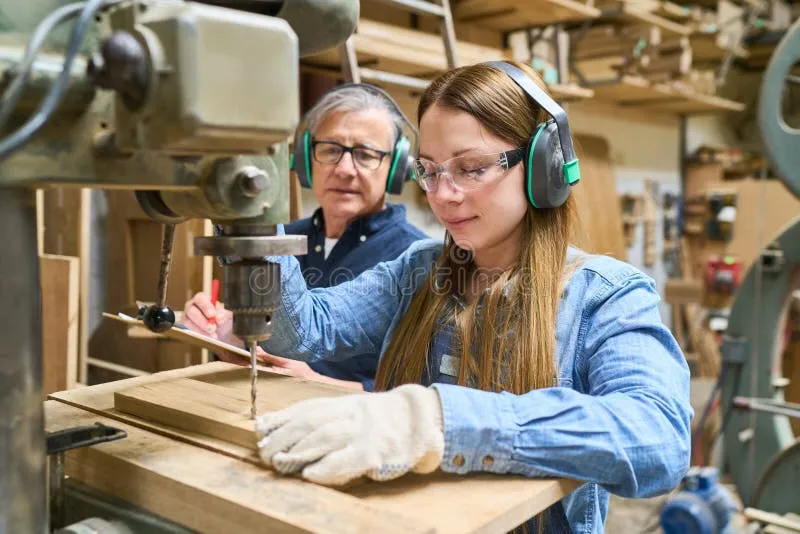
Photo: young adult apprentice learning trade skills with mentor in rural workshop, via thumbs.dreamstime.com
There's a joke that makes the rounds in small-town diners and farm supply stores across the country: "We've got plenty of help wanted signs. We just don't have any help." It gets a laugh, but the punchline lands a little flat when you're the shop owner who hasn't been able to fill a machinist position in eight months, or the farmer who watched three good harvest seasons go sideways because there weren't enough hands to get the work done.
The rural skills shortage is real, and it's been building for decades. Young people left for cities and college towns. Trade schools consolidated or shuttered. And the assumption that someone would always show up to do the work—well, that assumption ran out of runway.
But something interesting is happening now. Instead of waiting for a solution to arrive from the outside, rural communities are engineering one from within.
Building the Pipeline Themselves
In Cozad, Nebraska, a small manufacturing company that makes agricultural equipment parts decided a few years back that they were done posting jobs online and hoping for the best. They sat down with the local high school and the nearest community college and worked out a deal: students could earn college credit and a paycheck while learning precision machining on real equipment in a real shop.
The program started with six kids. Within two years, four of them were full-time employees. One is now a lead operator.
"We stopped thinking of workforce development as somebody else's problem," says the company's operations manager. "If we needed skilled machinists, we had to make skilled machinists."
That mindset is catching on. From small manufacturers in the Midwest to timber operations in the Pacific Northwest, rural employers are increasingly stepping into a role that used to belong exclusively to colleges and vocational schools—because they've realized that waiting for those institutions to solve the problem isn't a strategy. It's just delay.
Farmers Teaching Farmers
The agricultural world has its own version of this challenge. Sustainable farming practices—cover cropping, rotational grazing, integrated pest management—require knowledge that isn't always easy to come by, especially for beginning farmers or those transitioning from conventional methods.
In parts of the Southeast, experienced farmers are formalizing what used to be informal neighbor-to-neighbor knowledge sharing. Organizations like local Farm Bureau chapters and land-grant university extension offices are helping to structure mentorship programs where veteran producers take on apprentices for a full growing season, walking them through every decision from soil prep to market.
Kelsey Tanner, a second-generation farmer in central Tennessee who transitioned her family's cattle operation to regenerative practices five years ago, started mentoring other producers after realizing how hard it had been to find guidance when she was learning.
"I spent two years piecing together information from YouTube videos and expensive workshops," she says. "Now I've got three people who come out here regularly, and we just work through it together. It costs me some time, but honestly, I learn things too. And my county has better farmers because of it."
Those relationships don't just produce better farming—they anchor people to a place. Apprentices who learn their trade in a specific community, connected to specific mentors and local land, are far more likely to stay.
Trade Schools Find a New Role
Not every rural community can build a training program from scratch. That's where partnerships between small businesses and regional technical colleges are proving their value.
In rural eastern Kentucky, a coalition of small construction and electrical contractors got together and approached a local technical college with a proposal: they'd help fund a revised curriculum, provide job-site training hours, and guarantee interviews to graduates—if the school would align its programs more closely with what the region actually needed.
The result was a construction trades program that went from 12 graduates per year to nearly 40 within three years. More importantly, the vast majority of those graduates stayed in the region.
"These are kids who grew up here, whose families are here," says one of the contractors involved in the partnership. "They didn't want to leave. They just needed a reason to stay, and a job they could build a life on."
That model—businesses and educators co-designing training—is increasingly being recognized by state workforce agencies as a best practice. Several states now offer grant funding specifically for rural employer-education partnerships, which means communities that take the initiative to build these programs may also be able to offset some of the cost.
The Mentorship Multiplier
Beyond formal programs, some of the most effective workforce development in rural America is happening through structured mentorship—one experienced worker, one newer one, and a shared commitment to passing something on.
In small towns where the local hardware store, auto shop, or welding business is often a single-owner operation, the question of succession is existential. Who takes over when the owner retires? In many cases, nobody—and the business closes, taking decades of specialized knowledge with it.
Some rural business owners are starting to think about this differently. Rather than viewing a potential successor as competition or a threat to their legacy, they're actively recruiting and training the next person to carry the business forward. Local chambers of commerce in states like Iowa and Montana have started "business succession mentorship" programs that match retiring owners with younger entrepreneurs who want to learn.
The arrangement benefits everyone. The retiring owner gets a transition plan. The community keeps a business it depends on. And the next generation gets a head start that no classroom can replicate.
It Takes a Town
What ties all of these efforts together is a shift in thinking about who's responsible for solving the rural workforce problem. The old model assumed that workers would be trained somewhere else and recruited here. The new model says: we have people. Let's train them.
That shift isn't just practical—it's cultural. It reflects a growing confidence in rural communities that they don't need to wait for permission or outside investment to solve their own problems. They can build the workforce they need, one apprenticeship, one mentorship, one graduating class at a time.
It's slower than hiring a headhunter. It requires patience and commitment. But it produces something a job posting never can: workers who are rooted in a place, trained for the actual work that needs doing, and invested in the community's success because it's their community too.
Rural America has always found ways to make things work with what it has. Turns out, that applies to people just as much as it does to land.