Quietly Unbreakable: Why Rural Towns Are Weathering Crises Better Than Anyone Expected
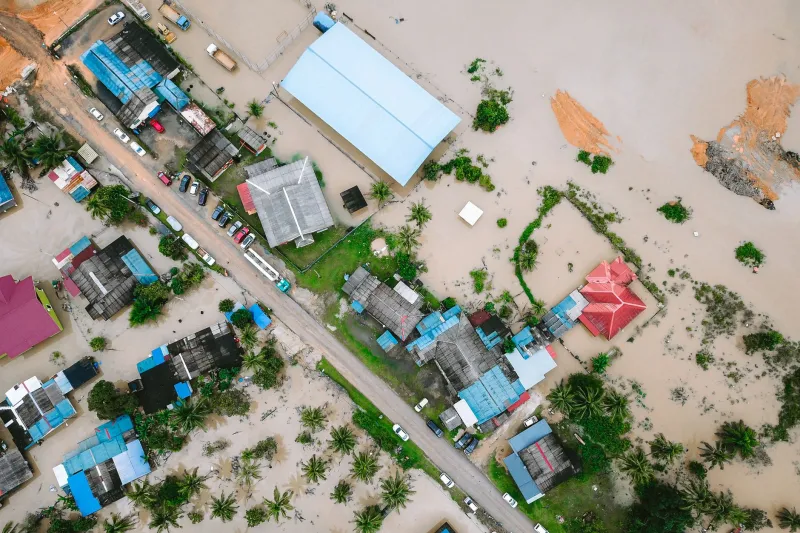
There's a moment during any major crisis — a hurricane, a supply chain collapse, a grid failure — when the cracks in a community's foundation become impossible to ignore. In recent years, those cracks have appeared in some surprising places. Not the small towns people assume are fragile, but the sprawling metro areas everyone assumed were bulletproof.
Meanwhile, in places like Custer County, Nebraska, and towns tucked into the hill country of Tennessee, life kept moving. Not without difficulty — but without the kind of full-stop paralysis that left urban neighborhoods without food, fuel, or functioning systems for days or weeks at a time.
The reason, it turns out, isn't luck. It's infrastructure — just not the kind you'll find in a city planning document.
The Kind of Backup Plan Nobody Wrote Down
Rural communities have always operated with a certain assumption baked in: help might be slow to arrive, so you'd better be ready to handle things yourself. That mindset, passed down through generations of farmers, ranchers, and small-town business owners, has quietly produced something urban planners are only now starting to study seriously — layered redundancy.
What does that look like in practice? Think about a small farming community that still has a functioning grain co-op, a local feed store, and three or four neighbors who know how to fix a diesel engine. When a supply chain hiccup makes tractor parts scarce, those neighbors aren't stranded. They improvise, trade, and share in ways that don't require an app or a logistics company headquartered in another state.
Or consider the growing number of rural towns that have invested in backup power systems — not through some sweeping government initiative, but because the lights went out one too many times and the community decided to do something about it. Solar microgrids, propane generators shared between a cluster of farms, community-owned battery storage systems — these aren't hypothetical. They're operating right now in places most people have never heard of.
Food Security Starts at the County Line
One of the most underappreciated advantages rural communities hold is proximity to food production. When grocery store shelves emptied out during the early days of the COVID-19 pandemic, plenty of small towns barely noticed — because their food wasn't coming from a distribution center 800 miles away.
Local farmers' markets, community-supported agriculture programs, and informal networks between neighbors and nearby farms meant that rural households often had access to fresh food even when national supply chains buckled. In some communities, that experience sparked a more intentional push toward local food resilience — towns actively working to increase the share of food consumed locally that's also grown locally.
That's not just a feel-good story. For rural entrepreneurs, it represents a genuine market opportunity. Demand for locally sourced products didn't vanish after the pandemic; in many places, it grew. Farmers who built direct relationships with their communities during that period found themselves with a customer base that stuck around.
Roads Less Traveled — and That's the Point
Rural road networks get a bad reputation. They're not always paved, they're sometimes winding, and they can flood. But they're also numerous, decentralized, and hard to completely block off. When a single interstate corridor gets shut down by a weather event or an accident, urban and suburban areas that depend on that artery can grind to a halt. Rural communities, which have long relied on a web of county roads and state highways, often have more options for rerouting.
Several agricultural counties in the Midwest demonstrated this during the severe flooding events of 2019. While major highways were closed for days, farmers and local businesses found alternate routes using roads that had existed on maps for decades but rarely showed up on anyone's GPS. Local knowledge — the kind that lives in the heads of people who've driven those roads their whole lives — turned out to be a genuine asset.
It's a good reminder that infrastructure isn't just physical. It's also the accumulated knowledge of people who know their land.
Community Emergency Protocols That Actually Work
Big cities have emergency management offices with full-time staff, elaborate response plans, and significant budgets. Rural communities often have a volunteer fire department, a county emergency coordinator who also handles three other jobs, and a group text chain.
And somehow, the group text chain works.
That's not a knock on professional emergency management — it's an observation about what happens when a community is small enough that everyone knows who has the chainsaw, who can open the church as a warming shelter, and who should be checked on first when the power goes out. Informal networks of mutual aid, which have always been a feature of rural life, function as a kind of social infrastructure that no government agency can replicate by decree.
In the aftermath of recent tornado outbreaks across the Southeast and ice storms in the Plains states, researchers noted that communities with strong social cohesion — where neighbors knew and trusted each other — recovered faster than those where those bonds were weaker, regardless of the size of the town. Rural areas didn't have a monopoly on that cohesion, but they tended to have it in greater concentration.
A Competitive Advantage Worth Talking About
For a long time, rural advocates focused on closing gaps — in broadband, in healthcare access, in economic opportunity. Those gaps are real and still worth closing. But there's a parallel conversation starting to happen, one that focuses on what rural communities already have that others don't.
Resilience is near the top of that list. Businesses looking to establish operations in locations that can weather disruptions are starting to pay attention. Remote workers choosing where to put down roots are factoring in what happens when things go sideways. And rural community leaders are beginning to recognize that their built-in redundancy — their local food systems, their social networks, their diversified infrastructure — isn't just a survival mechanism. It's a selling point.
The communities that figure out how to tell that story clearly, and invest in deepening those strengths rather than taking them for granted, are positioning themselves well for whatever comes next.
Because something always comes next. And the towns that are ready for it — quietly, practically, without a lot of fanfare — are the ones that keep standing when the dust settles.