Stop Apologizing for Your Marketing: The Case for Treating Word-of-Mouth Like a Strategy
Photo: Tad Dorgan, Public domain, via Wikimedia Commons
Can I confess something? I'm tired of hearing small-town business owners apologize.
"We really should be doing more with social media." "We know we need to get better at marketing." "We're just not tech people."
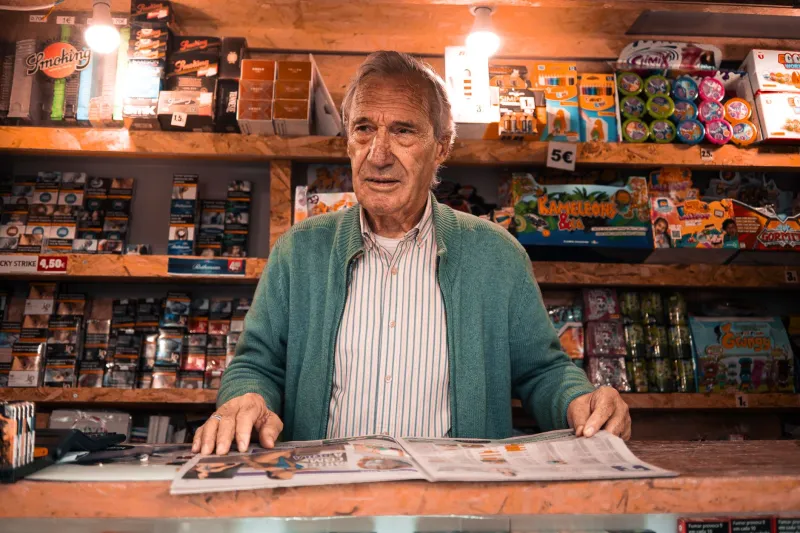
Here's what I want to say back: the hardware store in a town of 1,400 that sells to half the county on reputation alone is running a marketing operation most agencies couldn't replicate. It's just never been written down.
Word-of-mouth isn't a consolation prize for businesses that can't afford advertising. In rural America, it's the highest-ROI channel that exists — and the businesses that win long-term are the ones that stop treating it like luck and start treating it like a system.
Why the Referral Beats the Ad in a Small Town
A Facebook ad competes with a thousand other distractions. A recommendation from your neighbor's wife does not.
In a community where people have known each other for decades, a single recommendation travels at a speed no ad campaign can match. Mention you need a roofer at the co-op coffee pot, and you'll have three names, two opinions, and one story about the guy who didn't show up — all before your coffee's cold.
That's not charming folklore. That's a distribution network. And like any network, it can be strengthened deliberately.
Make the Referral Formal (Without Making It Weird)
You don't need a branded loyalty app. You need consistency.
The thank-you that costs $200. A handwritten note and a small gift — a hat, a gift card to another local business — sent to every customer who refers someone. One hardware store owner I heard about calls it his "$200 billboard," because that's roughly what a month of it costs and it outperforms every ad he ever ran. The gift card to another local shop matters: it circulates a dollar through town and makes another business owner an ally.
The customer spotlight. Feature a customer in your window, your newsletter, or your Facebook page — not as a testimonial, but as a genuine profile. The contractor you've supplied for fifteen years gets his face in the paper; you get a story that twenty other contractors will hear about by Friday.
The sponsorship with a job attached. Don't just slap your logo on the Little League banner. Show up. Coach, grill, keep score. Sponsorship in a small town isn't advertising — it's presence, and presence is what people actually remember when they need what you sell.
The Reciprocity Rule
Here's the piece most businesses miss: word-of-mouth runs on reciprocity. The people who refer you are watching whether you refer them.
Build your own referral habit deliberately. Keep a mental — or actual — list of every trade in town. When someone asks you for an electrician, you have a name and a reason to recommend it. When your customers see you sending business around town, the flow starts coming back your way.
One café owner in Minnesota puts it plainly: "I send everyone to the florist, the hardware store, the pharmacy. So when somebody new asks where to eat, I've got five business owners telling them my name before I've even met them."
Yes, Post Online — But Reframe It
This isn't an argument against social media. It's an argument against measuring yourself against influencer standards. Your Instagram doesn't need to be beautiful; it needs to be proof. Photos of the job you finished, the customer you helped, the team at the parade float. Content that confirms what the town already believes about you.
The digital channel works best in rural business when it amplifies the offline reputation, not when it tries to replace it.
The Bottom Line
You already have the best marketing machine in America. It's called everyone in your county knowing your name and what you stand for.
Stop apologizing that it doesn't look like a case study from a big-city agency. Write down what's already working, spend your two hundred dollars on thank-yous instead of impressions, and trust the network that's been carrying rural businesses since long before anyone had a follower count.