Swapping Skylines for Silos: The Young Professionals Ditching Cities for Small-Town Life

Photo by Photo by Vít Luštinec on Unsplash on Unsplash
For a long time, the story of young, ambitious Americans followed a pretty predictable script: graduate, move to the city, grind it out. The bigger the city, the better your chances — or so the thinking went. But somewhere between the pandemic, the remote work revolution, and a collective reckoning with what actually makes life feel good, that script started getting rewritten.
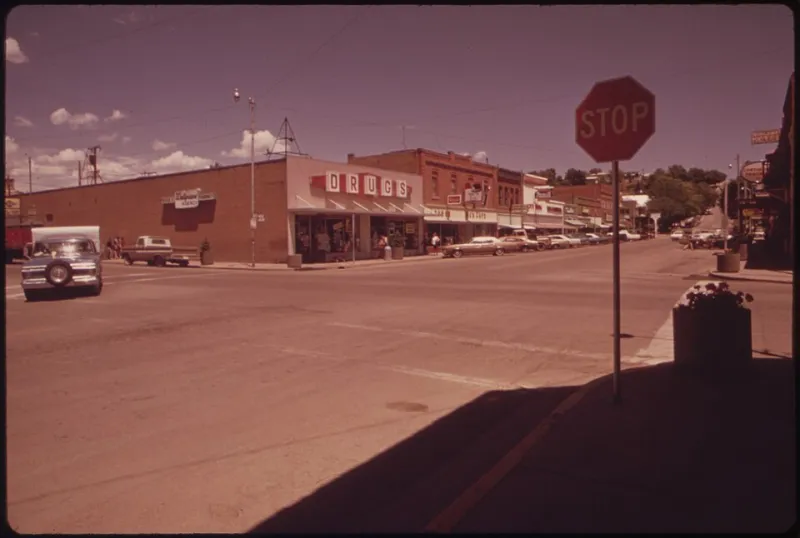
Today, a growing number of millennials and Gen Z professionals are choosing places like Livingston, Montana; Taos, New Mexico; and Oberlin, Ohio over the usual suspects — New York, Austin, Seattle. They're not retreating. They're choosing deliberately, and rural communities that are paying attention are starting to capitalize on the moment.
The Numbers Don't Lie
The USDA's Economic Research Service has been tracking what demographers are calling a "rural rebound" — a reversal of the decades-long population drain that hollowed out small towns across the country. While the data is still evolving, several rural counties that were losing residents steadily throughout the 2010s have started gaining them back, particularly among the 25–44 age bracket.
Real estate platforms have noticed too. Searches for homes in rural zip codes spiked dramatically after 2020 and haven't fully returned to pre-pandemic levels. People aren't just browsing. They're buying.
What's Actually Pulling Them In
Ask anyone who's made the move and you'll hear a few themes repeated over and over.
Cost of living is the obvious one. A software developer making $95,000 a year in San Francisco is scraping by. That same salary in a small town in the Ozarks or the Upper Peninsula of Michigan? That's a house with a yard, money in savings, and a life that doesn't feel like a constant hustle just to break even.
But it goes deeper than dollars. A lot of young professionals talk about space — physical space, mental space, the kind of breathing room that comes from not being surrounded by a million people at all times. They talk about knowing their neighbors. They talk about being able to afford to start something — a business, a family, a garden — without waiting a decade first.
Jordan Mercer, 31, moved from Chicago to a small town in central Wisconsin three years ago after her marketing firm went fully remote. "I kept waiting to miss it," she says, "but honestly? I feel more like myself here than I ever did there. I have a community. I have a house. I have a dog. I have time."
For others, it's a homecoming with new eyes. Marcus Tillman grew up in a small town in rural Georgia, left for Atlanta after college, and came back at 34 with a decade of tech experience and a remote job that goes wherever he does. "I always thought coming back meant giving something up. Now I realize I'm the one with options. The city needs me more than I need it."
Rural Towns Are Getting Smarter About Recruitment
Smart rural communities aren't just sitting back and hoping people show up. They're actively going after them.
Programs like Tulsa Remote in Oklahoma and the Vermont Relocation Incentive have gotten national attention for offering cash — sometimes thousands of dollars — to remote workers willing to plant roots. But plenty of smaller towns are getting creative on their own terms.
Some are partnering with local chambers of commerce to build welcome packages that go beyond a gift basket — we're talking introductions to local business owners, tours of available commercial space, connections to civic organizations and community groups. The idea is to shortcut the "outsider" feeling and fast-track new arrivals into the fabric of the community.
Others are investing in the infrastructure that makes remote work viable in the first place — better broadband, coworking spaces, and reliable cell coverage. Because none of this works if someone moves to town and can't get on a Zoom call.
The Tension Is Real — And Worth Talking About
It would be dishonest to paint this as a purely frictionless trend. Long-time rural residents sometimes feel ambivalent about the influx of newcomers, especially when housing prices start creeping up or when new arrivals bring assumptions about how things "should" be done.
Those tensions are real, and the communities navigating this best are the ones that acknowledge them openly. Welcoming new residents doesn't mean erasing what made the town worth coming to in the first place. The goal isn't to turn a small town into a mini-city. It's to strengthen what's already there.
The best outcomes happen when newcomers show up with genuine curiosity — when they come to participate, not to transplant their old life into a new zip code. And when existing residents see new arrivals as assets, not threats.
What It Means for Rural Business
Here's the part that should have every rural entrepreneur paying close attention: these newcomers are bringing skills, capital, and networks that rural communities have historically had to go without.
Some are starting businesses — coffee shops, creative agencies, online stores, consulting practices. Others are joining the workforce of existing local businesses that have been struggling to find qualified applicants for years. Some are buying farmland and trying their hand at agriculture with a fresh perspective.
The ripple effects matter. A new family moving in means a kid enrolled in the local school. It means a customer at the diner, a member at the credit union, a volunteer at the fire department. Population isn't just a number — it's the lifeblood of rural civic and economic life.
The Window Is Open — For Now
This moment won't last forever. Some companies are already pulling remote workers back to the office. Housing markets in desirable rural areas are tightening. The window for rural communities to make themselves genuinely attractive to this wave of potential residents is open right now, but it won't stay that way indefinitely.
The towns that are moving — investing in broadband, building genuine community infrastructure, actively recruiting and welcoming new residents — are the ones that will look back on this decade as a turning point.
For everyone else, the risk is watching the opportunity pass by while waiting to see how it plays out.
Rural America has always been resilient. The question now is whether it can also be strategic. The early signs say yes.